NEWS
01 October 2026
LIGNOFUN hosts co-creation workshop on advancing lignin valorisation at the Renewable Materials Conference 2026
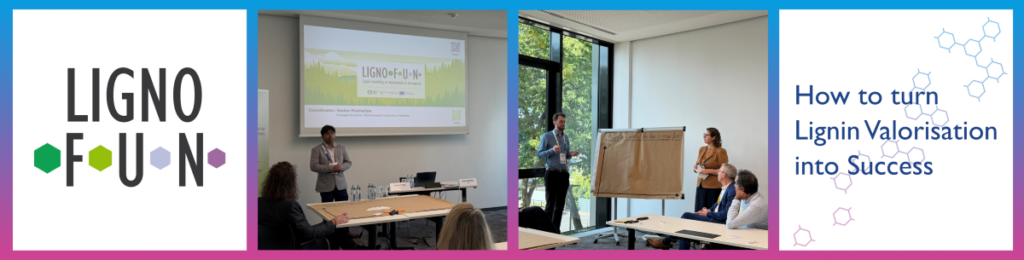
On 23 September, the CBE JU project LIGNOFUN, together with COUNTLESS, brought together experts from industry, research, and innovation for the interactive workshop “How to Turn Lignin Valorisation into Success” during the Renewable Materials Conference 2026.
The growing momentum in the field of lignin utilisation had already attracted considerable attention the day before the workshop during a special conference session. Some aspects of the discussion were taken up again during the workshop.
Details
As a project focused on unlocking the potential of lignin-derived aromatic compounds for industrial applications, LIGNOFUN used the workshop as a platform to engage stakeholders from across the value chain and explore pathways for accelerating the market uptake of lignin-based solutions.
Vaskar Mukherjee, Coordinator of the LIGNOFUN project, presented the project’s vision, objectives, and key activities. He highlighted how LIGNOFUN is developing and scaling innovative technologies to convert lignin into high-value bio-based aromatic building blocks that can replace fossil-based raw materials in a wide range of products. Throughout the workshop, he also actively participated in discussions at the co-creation stations, exchanging perspectives with participants and gathering valuable insights for the project’s ongoing activities.
The interactive sessions were moderated by Peter Stoffels and Sarah Refai, and Tatjana Schwabe-Marković from CLIB. They guided participants through a series of collaborative discussions designed to identify the most promising opportunities and challenges for the emerging lignin value chain.
Participants explored two key questions:
- How can different lignin feedstocks and processing technologies be optimally matched with specific application areas?
- For which products can lignin-based intermediates create real added value, and what market opportunities do they offer?
The discussions demonstrated that lignin’s diversity is both a challenge and a major opportunity. Participants emphasized the need for comprehensive data and a deeper understanding of the relationships between feedstock characteristics, conversion technologies, and end-use requirements. The workshop also reinforced the importance of close collaboration between feedstock suppliers, technology developers, and downstream industries to ensure successful market implementation.
Particular attention was given to advanced depolymerisation and fractionation technologies being developed within LIGNOFUN and COUNTLESS. These innovations aim to produce tailor-made bio-based aromatic compounds with application-specific properties, creating new opportunities in sectors such as plastics, resins, coatings, and speciality chemicals.
To conclude the workshop, participants jointly developed a roadmap outlining the key stakeholders and actions required to strengthen the European lignin value chain. Across all discussions, a clear message emerged: the successful commercialisation of lignin-based solutions will depend on coordinated action across the entire ecosystem. Collaboration, targeted support for first-of-a-kind plants, and continued investment in technology scale-up will be essential to reducing risks and accelerating market adoption.
The workshop also highlighted the importance of maintaining visibility for lignin valorisation and bio-based aromatics. Projects such as LIGNOFUN, together with cluster organisations and other innovation networks, play a crucial role in demonstrating the potential of lignin-derived products, communicating success stories, and building confidence among future users and investors.
LIGNOFUN would like to thank all participants for their active engagement and valuable contributions. The insights generated during the workshop will directly support the project’s ongoing research, innovation, and stakeholder engagement activities, helping to advance a strong and competitive European lignin value chain.
24 June 2026
LIGNOFUN @ Renewable Material Conference
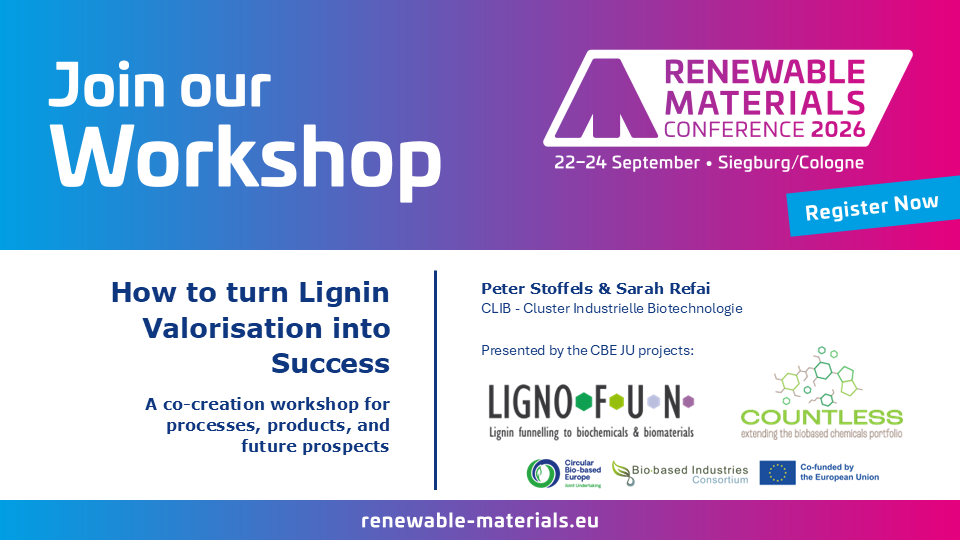
This interactive workshop, co-organised by the EU projects COUNTLESS and LIGNOFUN, explores pathways for lignin valorisation. In a World Café format, participants will discuss how to match lignin feedstocks with suitable processing methods and identify promising applications for lignin-based intermediates. The session will conclude with a joint reflection on future directions, challenges, and opportunities for advancing lignin-based solutions in sustainable materials and products.
Join our workshop and network with LIGNOFUN experts and like-minded stakeholders from the lignin value chain.
15 December 2025
Sustainable Interiors – CLIB-Webinar Review
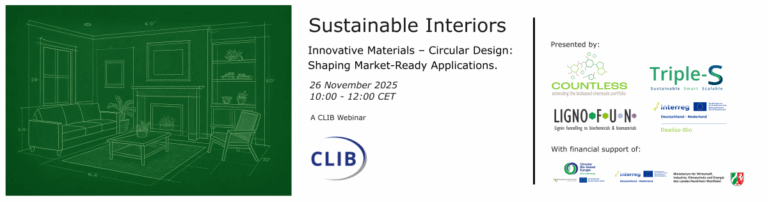
LIGNOFUN will target several markets with it’s innovative product prototypes developed using lignin-derived bioaromatics. A first showcase of future opportunities was now presented in a online webinar hosted by CLIB focussing on Sustainable Interiors.
Experts and participants discussed how innovative materials, design principles, and cross-sector collaboration can shape a more sustainable interior sector, and whether any market-ready solutions exist.
The webinar was a great first glimpse into real market opportunities and a great forecast for waht we plan to archieve in LIGNOFUN.
31. October 2025
Master’s Thesis Opportunity in the LIGNOFUN Project
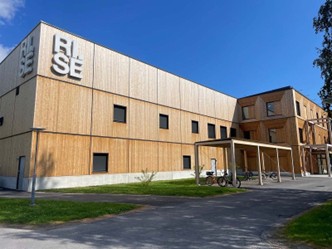
Are you interested in biotechnology, sustainability, and the circular bioeconomy? The LIGNOFUN project, coordinated by RISE, is offering an exciting Master’s thesis opportunity on metabolic engineering of Pseudomonas putida for the production of cis,cis-muconic acid (ccMA) from lignin-derived aromatics.
Adipic acid, used in nylon, polyurethane, and other materials, is currently produced from petroleum, generating significant greenhouse gas emissions. LIGNOFUN aims to develop a bio-based alternative that transforms underutilized lignin streams into high-value sustainable chemicals.
The thesis project will take place at RISE Processum AB in Örnsköldsvik, Sweden, where students will work within the RISE Bioeconomy Arena, a unique innovation hub combining biotechnology and chemistry testbeds. Students will contribute to engineering and screening Pseudomonas strains, optimizing pathways for efficient conversion of lignin-derived aromatics to ccMA, and may also participate in pilot-scale cultivation depending on thesis scope.
This is a unique opportunity to gain hands-on experience in industrial biotechnology and green chemistry, working alongside experts in a European project that directly supports the transition to a circular and climate-neutral bioeconomy.
Interested students can download the full thesis description Master’s thesis: Metabolic Engineering of Pseudomonas putida | RISE.
Credits: 30 or 60 ECTS
Location: Örnsköldsvik, Sweden
Start: January 2026
Deadline: 30 November 2025
Contact: andreas.s.johansson@ri.se or vaskar.mukherjee@ri.se
27. June 2025
CBE JU funded project LIGNOFUN has been launched to unlock the power of lignin for a fossil-free future
LIGNOFUN (LIGNin-based arOmatic FUNnelling to high-value biochemicals and biomaterials production) is an Innovation Action project funded by CBE JU under Horizon Europe (Grant agreement ID: 101214432) with a budget of 8.8 Million euros.
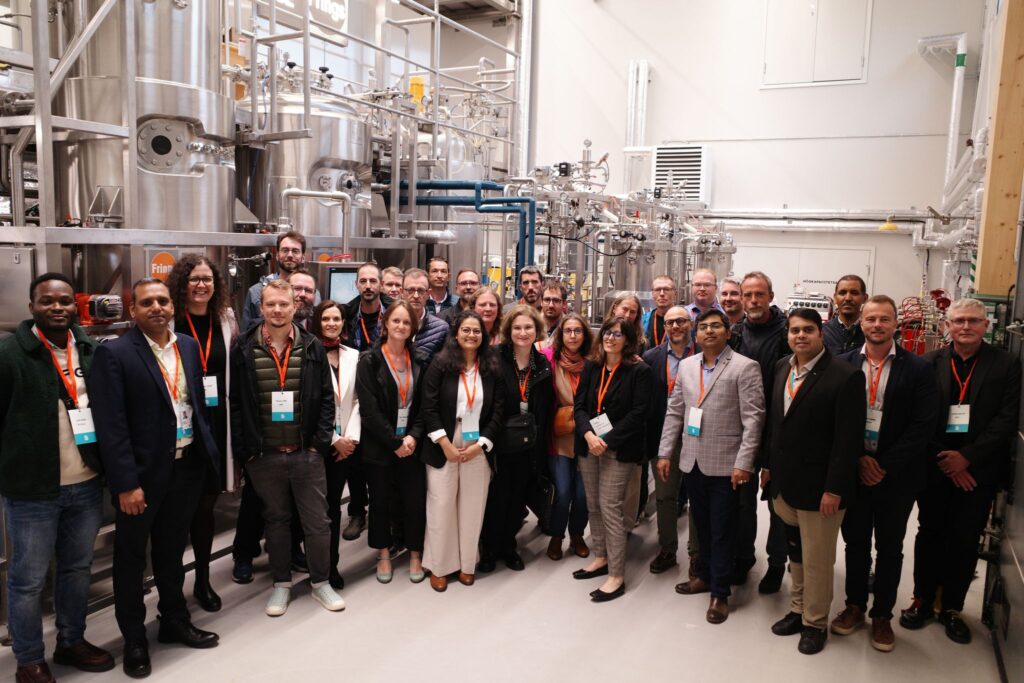
The project was officially kicked-off in Örnsköldsvik in Sweden. Hosted at the location of project coordinator RISE, the launch marks the beginning of a four-year innovation journey to transform lignin, an abundant by-product of the pulp and paper industry, into high-value bio-based chemicals and materials.
Underutilized lignin to high-value compounts
Each year, millions of tonnes of lignin are generated in pulp mills across Europe, but most of it remains vastly underutilized—typically burned for low-grade energy recovery. LIGNOFUN aims to change that. By optimizing two innovative lignin depolymerisation technologies—METNIN and OHRIGINS—the project will unlock aromatic-rich product streams and funnel them into sustainable applications such as biobased foams, adhesives, coatings, composites, wood panels, Nylon 66, cosmetics and personal care products, and antioxidant for rubber-based material production.
To ensure these processes move from lab to market, the project will advance both technologies to TRL 6–7 and demonstrate industrial relevance through prototype validation, performance benchmarking, and end-user integration.
Shaping a sustainable bioeconomy together
Beyond the technological breakthroughs, LIGNOFUN will evaluate the environmental, social, and economic sustainability of lignin-based innovations using life cycle assessment (LCA), techno-economic analysis (TEA), and social impact metrics. The consortium also emphasizes early stakeholder engagement, aiming to co-create market-ready solutions and build momentum for bio-based circular value chains in Europe.
The project brings together a robust consortium of 18 partners from 9 countries, including leading research institutes, SMEs, large industry players, and clusters—all united by a shared mission: to replace fossil-derived aromatic compounds with sustainable lignin-based alternatives.
RISE Processum AB (SE), RISE Research Institutes of Sweden AB (SE), RISE Lignodemo AB (SE), VITO (BE), MetGen Oy (FI), Fundacion CENER (ES), Juno Composites Ltd (IE), NovelYeast (BE), Kastamonu Entegre (TR), Celignis Ltd (IE), CLIB (DE), IDENER R&D (ES), Budapest University of Technology and Economics (HU), FCBA (FR), Moses Productos SL (ES), Fundación AITIIP (ES), Helia-D Ltd (HU), and Centro Tecnológico Riojano (ES).
Funded


The project is supported by the Circular Bio-based Europe Joint Undertaking and its members. Funded by the European Union. GA ID 101214432. Views and opinions expressed are however those of the author(s) only and do not necessarily reflect those of the European Union or CBE JU. Neither the European Union nor the CBE JU can be held responsible for them.