National Renewable Energy Centre of Spain (CENER)
Project Partner
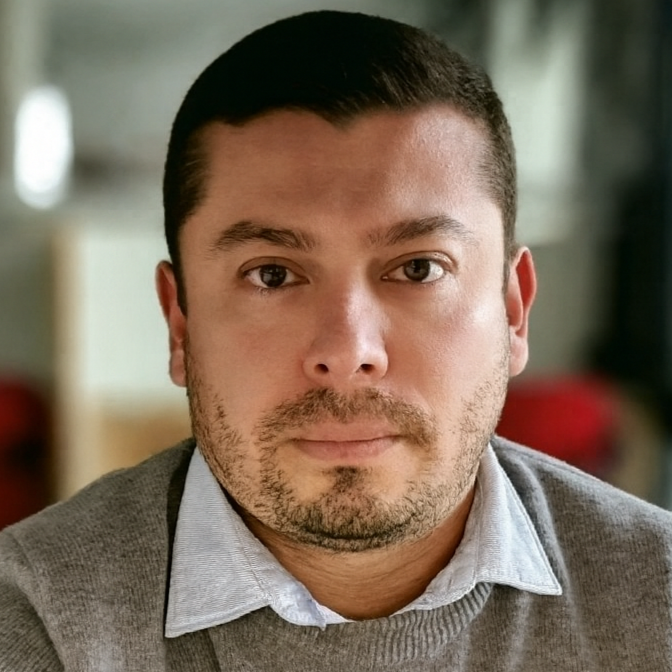
Ines del Campo
Vicente López
Alberto Clemente
Juan Felipe Bermeo
Researcher, expert in biorefinery processes will participate in WP2,7 and 8
Innovation Manager,
expert in exploitation and IP assessment will participate in WP9
Researcher, WP2 leader
(expert in lignin depolymerisation)
and participate in WP3, 4 and 6
Researcher, Expert in LCA and S–LCA
will participate in WP8
Description of CENER
The National Renewable Energy Centre of Spain (CENER) develops applied research in renewable energies, and provides technological support to companies and energy institutions in five areas: wind, solar thermal and photovoltaic solar energy, biomass, energy transition in cities, and grid integration, electrical storage and hydrogen. CENER is a technology centre with worldwide recognised prestige, activity and experience.
The CENER Biomass Department performs applied research activities in the field of biomass, providing R&D services and technical assistance to all the agents of the sector.
The Dept. is focused on the development & optimization of production processes of bioproducts, solid biofuels, advanced liquid or gaseous biofuels, as well as biorefinery concepts. Indeed, the main pillars are focused on solid biofuels, bioprocesses and comprehensive sustainability assessment.
The main infrastructures in this department include the Biomass Laboratory (biomass & biofuels characterization and process development at lab scale), as well as the Biorefinery and Bioenergy Centre (BIO2C).
What is your task in the project LIGNOFUN?
CENER leads WP2, scaling its lignin catalytic depolymerisation technology (OHRIGINS™) to industrially relevant scale and refining it with end-users feedback. OHRIGINS™ fits seamlessly into Kraft pulp mills worldwide—using similar reagents and side streams that can be re-integrated into standard pulping—demonstrating the important economic impact kraft plants. CENER also oversees validation product in personal care, cosmetics and rubber products and as precursors for phenolic resins and adhesives, while leading circularity, resource-efficiency, and environmental/social impact assessments of the biobased products.
Role, Relevance & Interfaces in the Project
1. CENER’s main challenge in LIGNOFUN lies in scaling OHRIGINS™ catalytic depolymerisation technology to TRL6 while ensuring robust process control, economic feasibility, and compliance with strict EU standards. Achieving consistent quality from heterogeneous kraft lignin streams and integrating side flows into pulp and paper mills with minimal cost. 2. This task is essential because OHRIGINS™ transforms an underused by-product into renewable aromatic intermediates, reducing dependency on fossil phenols and formaldehyde, and demonstrating circularity by reintegrating effluents into kraft processes. The work is crucial to validate sustainable bio-based solutions that match industrial performance while lowering environmental and social impacts.. CENER is connected to a wide set of stakeholders, including pulp and paper mills, end-users in cosmetics, rubber, adhesives and coatings, policy makers, sustainability experts, and consumer-oriented industries, ensuring impact across the value chain.
Contact us
Centro Nacional De Energías Renovables (CENER)
Avenida de la Ciudad de la Innovación 7,
31621, Egüés (Comunidad Foral de Navarra)
Funded
The project is supported by the Circular Bio-based Europe Joint Undertaking and its members. Funded by the European Union. GA ID 101214432. Views and opinions expressed are however those of the author(s) only and do not necessarily reflect those of the European Union or CBE JU. Neither the European Union nor the CBE JU can be held responsible for them.